Xavier Bertels

I’m Head of Product at Phished. Previously CPO at SweepBright and co-founder of Mono.

Sexy UI Design

Client: “This is not entirely what I’m looking for, I’m looking for something a bit more . . .”
Designer: “Modern? Timeless? Playful?”
Client: “Sexy!”
Designer: cringe

This has become somewhat of a running gag among designers. In my experience, a running gag can be a sign of dogmatic thinking. Since part of my job is to question everything, I had to give this some more thought.

First, on the word sexy. Collins dictionary says:

You can describe people and things as sexy if you think they are sexually exciting or sexually attractive.

The key word being things. Unless the editors of Collins are referring to objectophilia, I believe we have been granted permission to call anything sexy. Especially if we find it exciting or attractive on both a physical and an emotional level.

But why do designers cringe when they hear the word sexy in a design context? Maybe it is because a functional, modernist design aesthetic has become the holy grail of good design1. Much of the design discourse of the past decennia was about removing embellishments. And perhaps our understanding of the word sexy has become too superficial. So superficial that we have forgotten its meaning reaches beyond those embellishments.

Sexy does not mean just physically attractive. Sexy is about attitude and content as much as it is about visual appearance. Even when we were designing this website we had a thorough discussion about whether to include a webfont. Why not pick Helvetica and be done with it? From a functional point of view, it would be an adequate solution. Not very attractive though.

It is okay to try to create an attractive interface that can suck a user into a state of productive, enjoyable flow. Just like dating a person you find sexy is satisfying, so can using an interface you find sexy be satisfying. But sexy is a living definition. To remain sexy, you have to deliver what you promise. An attractive design that is hard to handle will become a pain in the ass before you know it. And you will feel betrayed because it lured you in with deceitful aesthetics.

Sexy design is extremely hard. It is about striking the right balance in the entire design package. Useful and beautiful. From the moment you first see something, to the moment you have been using it for a while. A design can be sexy and we should embrace that.

1 See The History of Flat Design.
Do What You Love is a Fast Track to Nowhere

Do What You Love, Love What You Do; a much heard mantra. Maybe especially so among designers. Not too long ago, an opinion piece on Slate magazine1 poked some holes in that mantra. I agreed with that article somewhat, but eating those words still left a faintly bitter aftertaste.

I think I figured out what has been bothering me about it. It is the Do What You Love part of the mantra that creates the problem. Do What You Love leads you to a maze of questions to which you might never reach a satisfying conclusion. Here is why; it implies that you first have to find what you love, before you can do, well, anything. As long as you are looking for what you love, everything you do is seemingly fruitless. It is a paralyzing statement, because finding what you love, without doing anything, is impossible.

The other part of the mantra is much, much more important. Love What You Do. Although you might not be doing what you love, it is possible to love what you do. It is the only part of the equation we excercise any control over. Loving What You Do, as opposed to Doing What You Love, is a conscious choice. If you choose to love what you do, reaching a state of flow2 is much easier.

So from now on, I will make an effort to love what I do. Am I doing what I love? Who knows. It is too much of an existential question to be asking oneself all the time. It is a path that ultimately leads to unhappiness. And if flow is happiness, then I would much rather be living in that place.

1 Read the article on Slate magazine: Do what you love, love what you do: An omnipresent mantra that’s bad for work and workers.

2 In Flow: The Psychology of Optimal Experience Mihaly Csikszentmihalyi describes how flow illuminates the path to truly satisfying experiences, and ultimately, happiness.

Code of Ethics

So every profession has a code of ethics. Doctors have a code of ethics—the Hippocratic Oath—lawyers, accountants, journalists . . . In fact, part of a profession, is that there is a code of ethics.

— James Abruzzo via The Big Think

Makes me wonder, is there a code of ethics for designers? Watch the entire clip below if you are interested in some more context:

What’s up with Adobe?

Warning: designer rant.

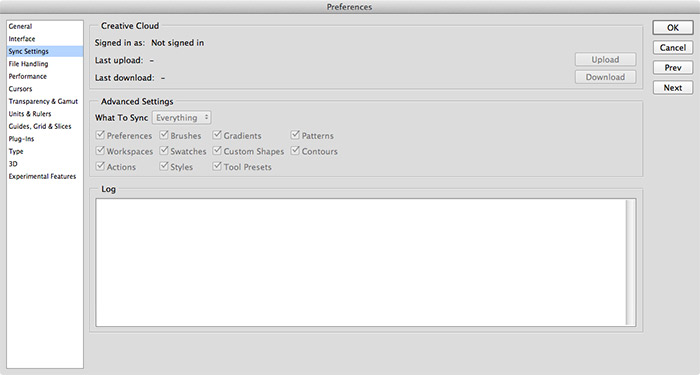
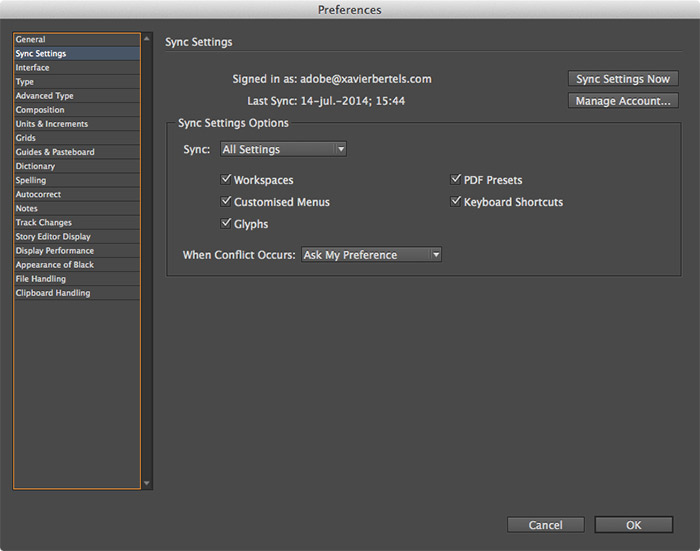
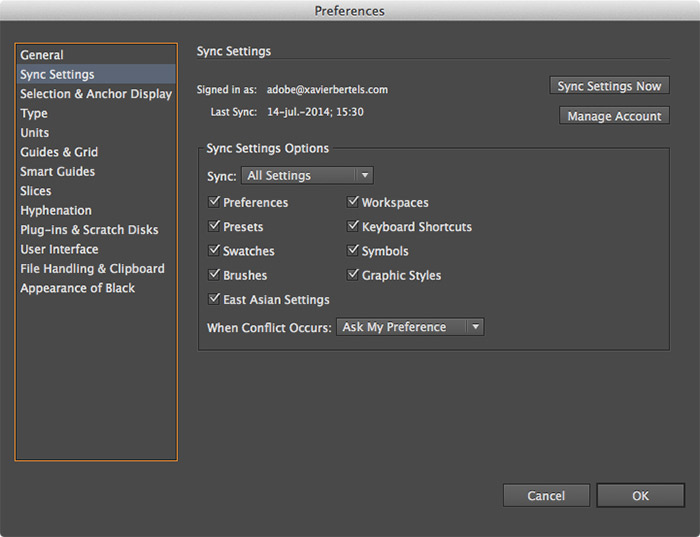
The biggest problem is a broken promise. Creative Suite and Creative Cloud would bring a coherent software suite and cloud integration. Just look at the sync settings panel in the latest Photoshop, InDesign and Illustrator. How on earth is it possible that they came up with, let alone released different solutions to the exact same problem in what is supposed to be a coherent software suite?

“Creative Cloud” is de facto just another app in the Adobe toolkit. What it should be is a way of thinking/streamlining an experience. There is something really, really wrong with the product vision at the top of the food chain. I sometimes wonder if there is any product vision at all. Adobe is a numbers-run company in stead of a product-run company.

Creative Cloud is so transparently a fad thought up by marketers, rather than a real product vision. Somebody with a product vision needs to take reign of this company again, or it will slowly slide into irrelevance. I would hate to see that happen, because I have liked Adobe for so long.

Web UI Frameworks to Build Better Products

Jen Kramer, in an article on Smashing Magazine (emphasis mine):

A framework is intended to get a website running quickly, with minimum debugging. Customize the heck out of it to look completely different, or change just a few colors and be done. However you use it, you’ll have standardized, documented code that can be easily passed on to another developer for maintenance and tweaking and that looks reasonable and functions well. The code is not perfect of course, but it’s pretty good. It cuts down the time required to create a website, which will make the website cost a bit less, too.

You can replace “website” with “web UI” in that quote. If you are an avid reader of this blog, you know that we like open source and standardisation of building blocks. There are many technical reasons to do so, but there is also a very good business reason, which I find is often misunderstood.

Jen argues that using a framework cuts down build time and thus costs. I realise this was not the big point of her article, but I regularly hear the same argument in conversations with other designers, project managers or business owners. While cutting costs certainly can be a result, it is not the only possible outcome. Building faster can just as well mean iterating and testing more often. It can mean that you have time to focus on parts of the design that matter most. Building faster can mean designing a better product.

Using a framework frees up time. As a company, you can cash in on that time, or you can use it to make your product better. We use standard building blocks because we believe it benefits the product, not our wallets.