Xavier Bertels

I’m Head of Product at Phished. Previously CPO at SweepBright and co-founder of Mono.

Designing New Products: Scoping Workshop

Some people ask us to help them design a new product. They ask us to design things that have not been invented. Solve problems that have not been solved. This can make it really hard to answer the last question in every onboarding conversation: “what do you think the budget will be?”

We sell value1. In order to know what that value is, we need to know what we are valuing. If all you have is a vague schematic idea of what you want to build, this can be a challenge. Even if you have a crystal clear idea, the execution is always more daunting than you think.

Estimating whether a project should be €10.000,00 or €100.000,00 can obviously make a big difference for both parties in every possible way. In order to make a better estimate, you need to turn up the volume of your microscope a bit.

That is why we do scoping workshops with some of our customers. And it works pretty well – even though it is no Silver Bullet™. Together with the customer, we get a better understanding of what it is we will design and build. The customer gets valuable (I did say we deliver value) insight in the form of user stories or a backlog. And we can define the scope of the project much clearer. That is a win-win situation.

This probably does not work for blue-sky thinking research type projects. In that case, all you need is a blue-sky research budget to get the job done. In all other cases, we can define the scope together!
1 Read Output & Value

Output & Value

Running a business1 demands that you come up with good arguments, make a clear decision, and stick with it for a while. Clarity is good. I have many discussions with my business partner2 about what kind of company we want to be.

One of the decisions we made is to focus on output. When done right, it can allow you to focus on what matters: do good work. Not time sheets. Not budget reporting. Not busy work. Real work.

Once you focus on output, you can find your value. As I mentioned before3, I am in the knowledge industry. When someone hires me and my colleagues, they buy insights and expertise, not time. That expertise can take many shapes. A business might want to learn how to build a design team. Or they might ask us to design a new application from scratch. In any case, our value is what we deliver – a solution to their problem.

The way you sell a project can help to set you up for success or failure. Save for a handful of legacy contracts, we have moved away from time sheets and hourly billing. We focus on output.

It can be hard to explain. It takes time to get used to. It takes time to sell it. The right clients understand the way this works and why it is, in the end, better for them. Because when we can focus on work, the work benefits and their business benefits.

1 I run an interface design company called Mono

2 Check out the website of Johan

3 Also read a related post: The Process

The Process

A fellow designer asked me recently: “Can you walk me through your design process?”

My answer is always as simple as it is disarming: I do not know.

I do not know because it does not keep me up at night. Solving the process problem is not useful to the people I work with. Their project will not fit inside my process box.

I observe customers. I explore visual styles. I map out navigation paths. I discuss features. I create a backlog. In summary, I know how to execute and when to do what. I use principles to guide me during a project.

I trust myself and my colleagues that we can figure it out along the way.

Some of the best work I have done is work that manifested itself outside of a process. I do not offer my process to clients. I am not Ikea, nor do I aspire to be. I am in the business of knowledge. I offer my experience and insights and ability to come up with a good solution. A process is a marketing trick to make design feel more scientific. Chemical reactions follow a process. Design does not.

Once you let go of process, you can use your energy to focus on output instead.

Why We Need To Embrace & Destroy UX Design

UX. It stands for User eXperience. It is the cyber- of this decade; quickly becoming a caricature of itself. And yet it is such a useful thing. Lord of The Rings helps me to understand my double relationship with this overused term.

I say overused because UX is a two-letter word that people in the tech industry put in front of pretty much any title. The most popular of which is “UX Designer”. Put it in a list like so:

  • UX Designer;
  • UX Developer;
  • UX Manager;

and even the redundancy becomes redundant. Back to:

  • Designer;
  • Developer;
  • Manager.

Any User Experience is the result of a team effort. A good User Experience is not necessarily the brainchild of one UX Designer. So how come we sell UX Design as if it is the result of thinking and/or execution by a specialised individual or group of individuals? How come we are creating schools that teach it? It is something I have been struggling to understand. Who is the real hero? It cannot be the UX Designer, but then it is.

With the danger of abusing the epic novel to illustrate a point, Lord of The Rings has helped me to understand the complexity. An analogy is obviously never 100% right, but bear with me.

Consider the concept User Experience of a product. Someone thinks hiring a UX Designer is a good idea. The organisation introduces the role to help create better products by having a central point of reference. However, so long as the role exists, that goal is not achieved. Because the true goal of so-called UX Design is for everyone in the organisation to work together on improving the User Experience, not to have one UX Designer responsible for the User Experience.

Back to Lord of the Rings. In order to have peace in Middle Earth, Frodo needs to destroy The One Ring. But this becomes very hard because the attraction to the Ring of Power is so strong.

In a very similar way, I think you need the UX Designer in order to remove UX Design from the organisation again. You need to have the role, the person, the journey. But, the role of UX Designer is an attractive role to be in and to perpetuate. When the UX Designer arrives at the point where it becomes necessary to remove the role from the organisation, it will probably all become very confusing.

Having UX Design as a concept at this point is probably useful. But we should also be prudent about thoughtlessly introducing it into our organisations. With it comes great power, and the responsibility to remove the role at some point.

If this does not make sense at all to you, that is okay. I write this mostly to better understand the dual relationship I have with UX Design. Thoughts and remarks are, of course, welcome.

Google Photos, the Final Blow for Privacy

Google just announced that they will host and sync all of your photos and videos, for free, forever. Let me give that a moment to sink in.

All of the images you have ever captured, backed up to one of the most secure clouds in the world, and automatically synced to all of your devices – iOS, Android and desktop – for free, forever.

I find that fucking scary. Besides the fact that a company with a user base that big – more than 1 billion Android users – is able to pull that off financially, here is why:

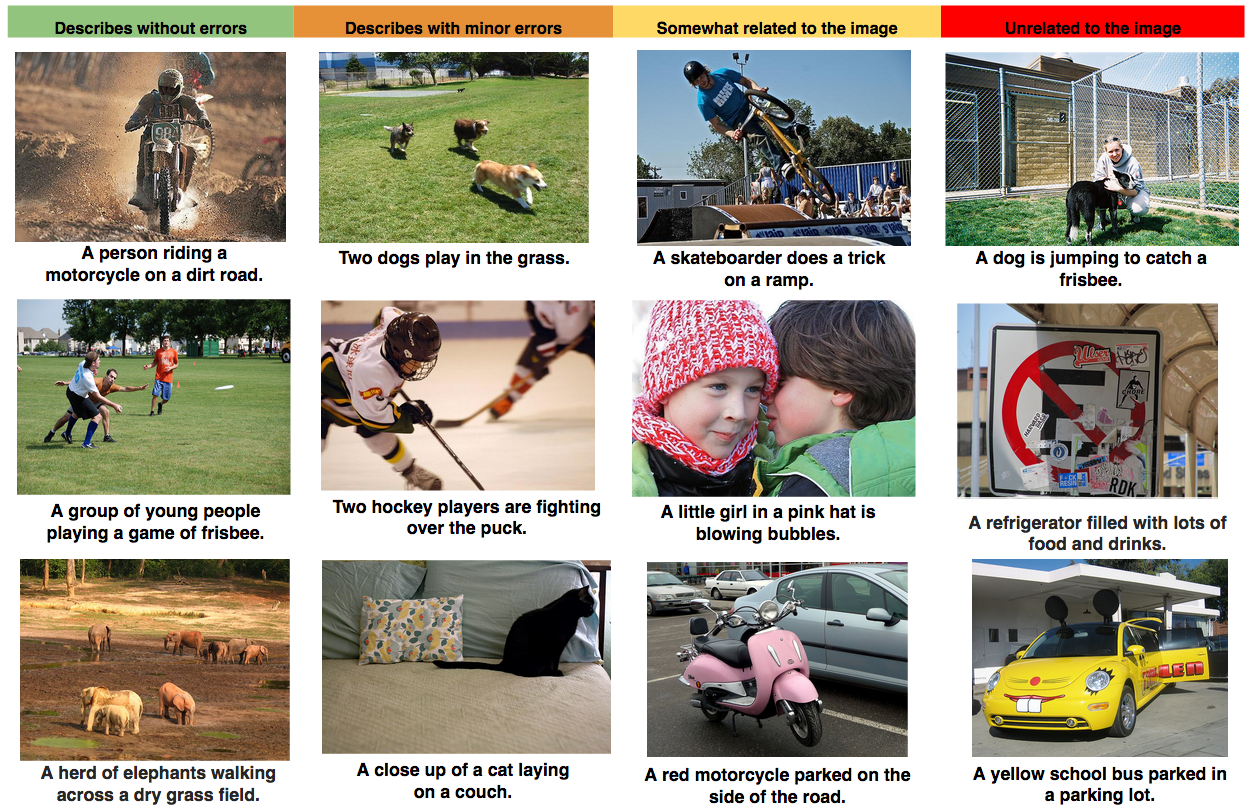
One of Google’s employees wrote a blog post, that it is now able to analyse and caption images automatically. You really have to see it to believe it. These images have been automatically processed and captioned without human interference:

As Aral Balkan put it, we have entered an age of digital feudalism, where the poorest – unable to buy similar digital services – will pay with their data and privacy. And the frustrating part is that there is no easy way to stop it. Google is valued at a higher price than the GDP of about 200 countries. So many people are invested in the company, financially, psychologically and even on business level (you use Google Apps, right?). How will anyone stop that?

You do not have to be annoyed by CCTV anymore. Nor by all the camera’s that are in public spaces or stores. People filming you on the streets? Not really an issue anymore. Those were actions that took place in public spaces anyway.

No, you now have to be afraid of those close to you that have Android devices. The seemingly normal action of taking a picture at a private party is now Google’s own private CCTV network in action. Photos are uploaded automatically to Google’s cloud, analysed and categorised. Even if you choose not to use any of their services, they are able to build a profile of you, based on photos and videos your friends take of you. Because they have facial recognition software running on their servers that is better at recognising people than you are.

Welcome to 2015, it is now 1984. Your most private moments are officially non-existent. Google Photos was the final piece of the puzzle, the final move in a chess play designed to index all of the world’s data. All of it. Even your most intimate moments. Big G is always watching.

When a friend whips out an Android phone, I’ll yell “Duck!”—and I’m only half joking. While Google’s intentions might just be selling ads, the risk lies in the sheer volume of intimate data they’ve centralized. It’s not Google abusing this that scares me; it’s the inevitability of someone else eventually finding a way to misuse this unprecedented treasure of personal information. The only safe move now is decentralization.